This post contains affiliate links. If you download a pattern through them, I may earn a small commission at no extra cost to you. Thank you for supporting Little Amigurumi Studio!
There is no single best yarn for amigurumi, but there is a best yarn for each project. The right choice depends on the toy you are making, how big it should be, who it is for and how much detail it has. The good news is that the choice is not hard once you know the three things that matter: the fiber, the weight and the color.
This guide explains how cotton, acrylic, wool and blends behave in a crochet toy, how yarn weight changes the size of the finished piece and how to read a yarn label. At the end you will find four PDF patterns that show how different projects call for different yarns.
Best Yarn for Amigurumi at a Glance
| Fiber | Good to know |
|---|---|
| Cotton | Smooth and firm, with little stretch. It shows the stitches clearly and keeps its shape, which makes it a popular choice for beginners. |
| Acrylic | Easy to find in many colors and usually easy to care for. It is soft and light, but some kinds are fuzzier and can pill. |
| Cotton and acrylic blend | A middle road: the clear stitches of cotton with a little more give and softness. |
| Wool | Warm, soft and springy. It suits cuddly toys, but check the care label, because not every wool can be machine washed. |
| Plush or chenille | Very soft to touch, but the stitches almost disappear in the fluff. Better for experienced crocheters. |
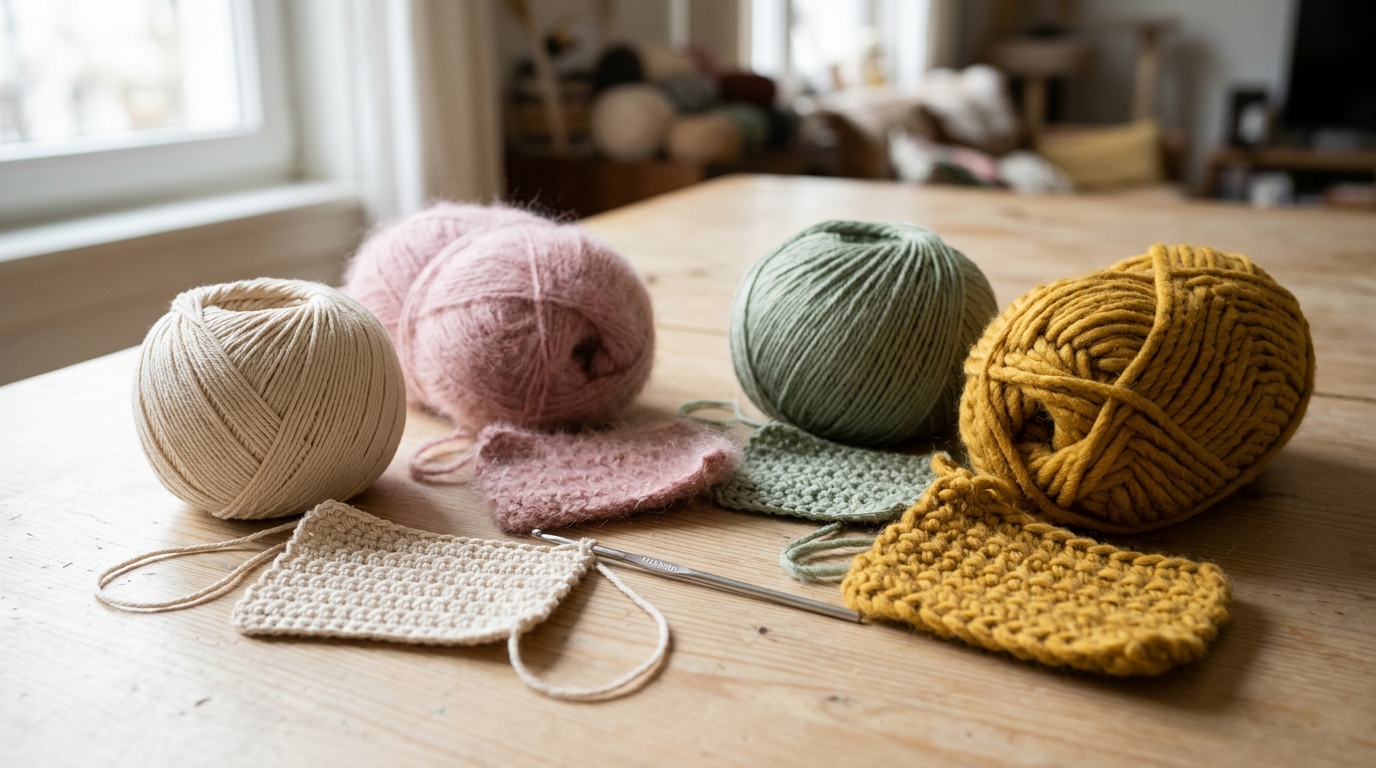
The Fiber: What Your Toy Is Made Of
Cotton
Cotton is the classic amigurumi yarn. It has very little stretch, so your stitches stay tight and the stuffing does not show through. A smooth cotton in a light color shows every stitch, which makes counting and fixing mistakes easy. The downside is that it does not forgive uneven tension, and a long session can be tiring for the hands, because the yarn does not give.
Acrylic
Acrylic is widely available in many colors and often costs less than cotton, so it is good for practice. It is light and soft, and many acrylic yarns are easy to wash. Choose a smooth, tightly twisted one, because loose, fuzzy acrylic can split under the hook and hide the stitches. Over time some acrylics also pill.
Wool and Wool Blends
Wool is soft and springy, and it makes cozy, huggable toys. It is usually warmer and bulkier than cotton. If the toy is a gift for a child, look at the care label first: some wool needs hand washing, which is not practical for a toy that will be loved hard.
Blends
A cotton-acrylic blend gives you some of the clear stitch definition of cotton and some of the softness and stretch of acrylic. It is a good all-round pick if you cannot decide between the two.
Plush and Fuzzy Yarn
Chenille and plush yarns make wonderfully soft toys, but you cannot see the stitches. That makes the magic ring, counting rounds and decreasing much harder. Keep them for later, once you are comfortable with the basics.
The Weight: How Thick Is the Yarn?
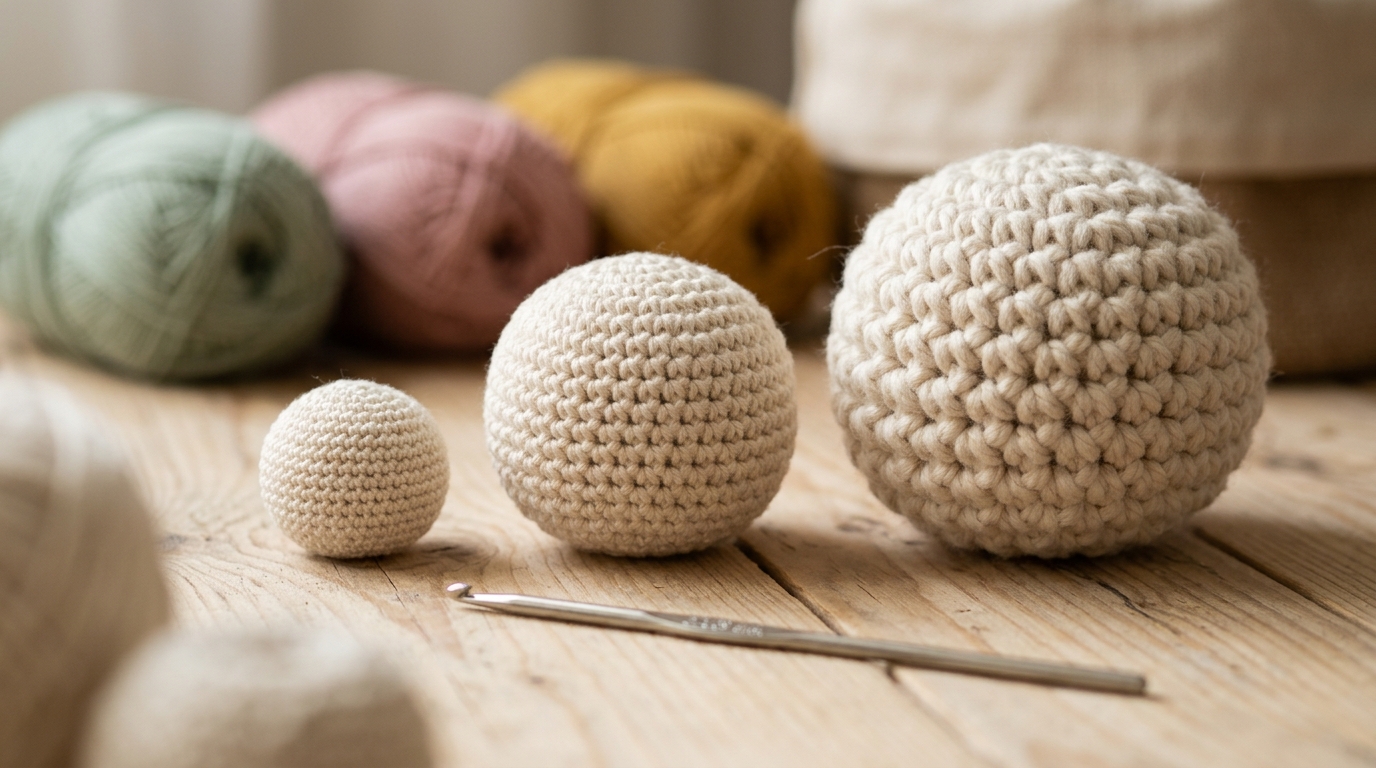
Yarn weight is the thickness of the strand. It is the biggest factor in the size of your toy: with the same pattern, a thinner yarn gives a smaller toy and a thicker yarn a bigger one. The common weights for amigurumi are:
- Fingering or sport. Thin yarn for small, detailed toys and keychains. It needs a small hook and more time, but the stitches are fine and the shape is crisp.
- Light worsted or DK. A good middle size. Many patterns use it, and it is easy to see and handle.
- Worsted. Thicker, so the toy works up faster and comes out bigger and softer-looking. It is the weight most beginners find easiest to work with.
- Bulky. Quick, big and chunky toys. The stitches are large, so fine details are harder to get.
The golden rule is to use the weight your pattern lists. If you change it, the finished size changes too, and the amounts of yarn and stuffing change with it.
Match the Hook to the Yarn
Yarn labels suggest a hook for soft, drapey fabric. Amigurumi needs a dense fabric so the stuffing stays hidden, so many crocheters work with a hook one or two sizes smaller than the label suggests. Your pattern usually lists the hook it recommends, and that is the best starting point. Hold your work up to the light: if you can see through the gaps, the hook is too large, and if the hook is hard to push into the stitches, go up one size. To check how a pattern describes its materials, see my guide on how to read an amigurumi pattern.
The Color: Light, Plain and Easy to Read
Pick a light or medium plain color for your first toys. Very dark yarn, such as black or navy, absorbs the light and hides the stitches, so use it only for small parts like noses and ears. Variegated or speckled yarn looks pretty, but it can make the pattern harder to read.
How to Read a Yarn Label
A label tells you what you need to know before you buy. Look for these points:
- Fiber content. It tells you whether the yarn is cotton, acrylic, wool or a blend.
- Weight. It is usually shown as a name or a number, so you can compare it with your pattern.
- Length and weight of the ball. This shows how much yarn you get, so you can estimate how many balls the pattern needs.
- Care instructions. They matter for toys that will be washed.
- Dye lot. If you need several balls of the same color, buy them together and check that the dye lot is the same, since colors can vary slightly between batches.
How Much Yarn Do You Need?
Small toys use very little yarn, and the exact amount depends on the pattern, the yarn and your tension. The pattern’s materials list is the best guide, and some designers give a rough amount for each color. If the pattern does not, buy a little extra of the main color, because it is easier to finish one toy in a single batch than to match a color later. Leftover yarn is useful for small parts, hair and clothes, so keep your scraps.
Which Yarn for Which Toy?
- A first toy. Smooth cotton or a cotton blend in a light color, in the weight the pattern lists.
- A toy for a baby or a small child. A soft yarn that is easy to wash, with embroidered features instead of small parts. Follow the safety guidance for toys where you live.
- A keychain or tiny toy. Thin yarn and a small hook, which gives crisp little shapes.
- A big cuddly toy. Thicker yarn, which works up fast and feels soft.
- A doll. Smooth yarn in a light skin tone for the body, plus any yarn you like for hair and clothes. See my guide on how to make an amigurumi doll.
4 Patterns That Show How Yarn Choice Works
Here are four patterns from my collection, each with a different yarn story. The details come from each product page, so check the page for the exact materials, terms and file details before you buy.
1. Bat Amigurumi
Described as an easy pattern. The materials are fingering or light worsted yarn with a 2.5 or 3.0 mm hook, which gives a bat about 12 cm tall. It is a nice lesson in how a thin yarn and a small hook produce a small, crisp toy.
2. Cute Crochet Turtle Keyring
Listed as Beginner / advanced beginner. The finished turtle is about 8-10 cm tall and uses small amounts of yarn, so it is a good place to use up leftovers or try a new yarn without buying much.
3. Crochet Dolphin
Described as suitable for both beginners and experienced crocheters. The finished size depends on your yarn and hook, so thin yarn gives a tiny dolphin and thicker yarn a bigger one. It makes the link between weight and size easy to see.
4. Frog Hat Doll
Listed as beginner friendly. The materials include cotton yarn, a hook, fiberfill, safety eyes or embroidery thread, buttons and a sewing needle, and the doll is about 9 in (22-23 cm) tall. It shows how one project can use cotton for the whole doll.
Get the Frog Hat Doll Pattern →
For more ideas, read my guide to easy amigurumi patterns for beginners, check the amigurumi starter kit list, or browse the patterns page. If the craft is new to you, start with what amigurumi is.
Frequently Asked Questions
What is the best yarn for beginners?
Smooth cotton or a cotton blend in a light, plain color, in the weight your pattern lists. You can see the stitches, and the yarn keeps its shape.
Can I use acrylic yarn for amigurumi?
Yes. Choose a smooth, tightly twisted acrylic, because fuzzy or loosely spun acrylic hides the stitches. Acrylic is a practical choice for practice and for toys that need washing, as long as the care label allows it.
Can I use a different yarn weight than the pattern says?
You can, but the finished toy will be a different size, and you will need a different hook and a different amount of yarn. For your first toys, use the weight the pattern lists.
Why is my stuffing showing through the stitches?
Usually the hook is too large for the yarn, or the tension is loose. Try a hook one size smaller, and hold your work up to the light to check for gaps.
What yarn is safest for a baby’s toy?
Pick a soft yarn that is easy to wash, embroider the face instead of using safety eyes and avoid small parts. Follow the safety rules for toys where you live.
Do I need to buy all the yarn at once?
For a toy in one main color, yes, it is best to buy it together and check the dye lot, because colors can differ slightly between batches. Small amounts of contrast color are easy to match later.
Happy crocheting!